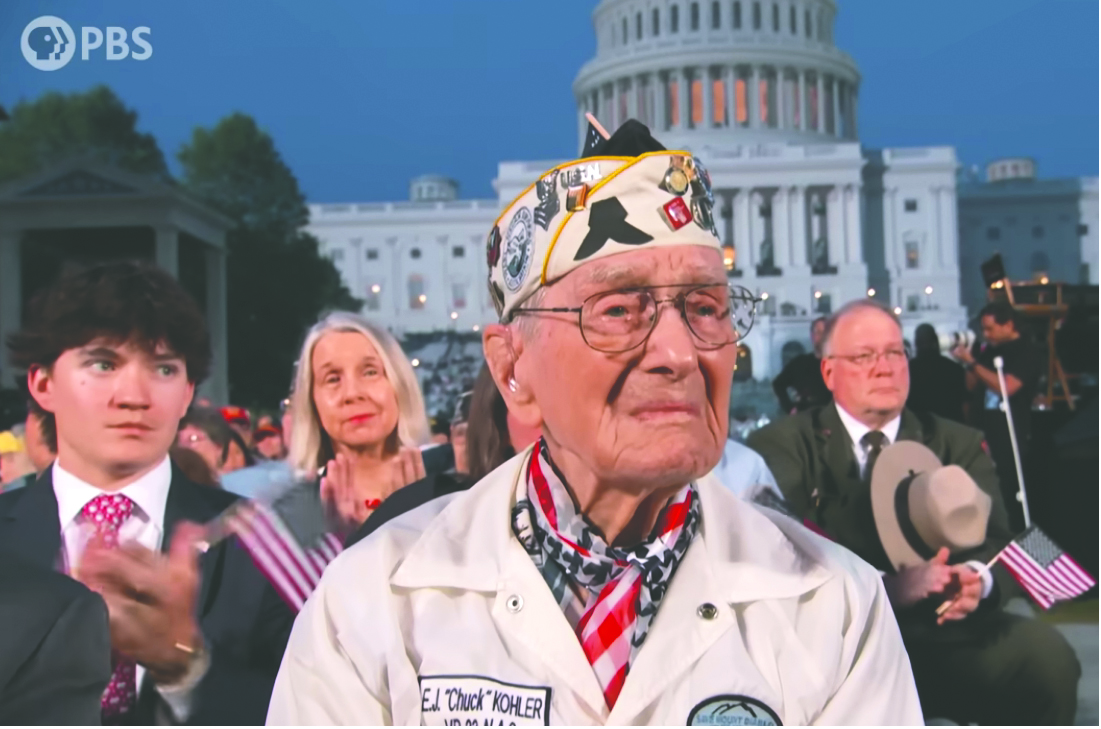

Pearl Harbor Survivor, Earl “Chuck” Kohler was not present for this year’s Memorial Day Ceremony held at the Grove Park in Clayton like he usually is.
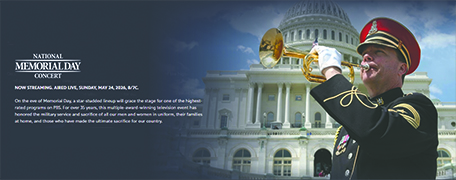
He was in Washington DC as a guest of honor for the 85th annual National Memorial Day Concert conducted on the West Lawn of the Capitol which was broadcast live nationally on PBS, locally KQED, on May 24. Kohler is one of the last 11 living eyewitnesses to the attack on Pearl Harbor on December 7, 1941.
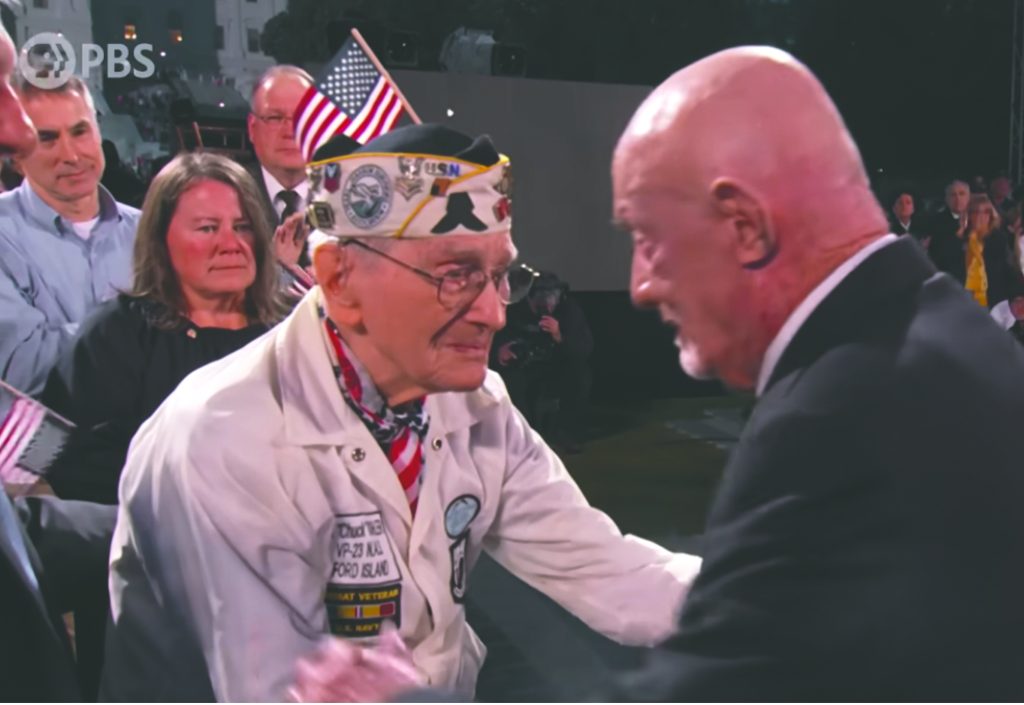
Hosted by actors Gary Sinise and Mary McCormick, the recognition and tribute to Kohler was emotionally powerful. His story was narrated by acclaimed actor Jonathan Banks, complete with Pearl Harbor slides and footage and dramatic music underneath.
“I’m so excited about going to the White House,” Earl “Chuck” Kohler the 102-year-old Navy veteran told me, “I feel truly honored not just representing myself, but all those who were injured and gave their lives.”
A Teenager at Pearl Harbor
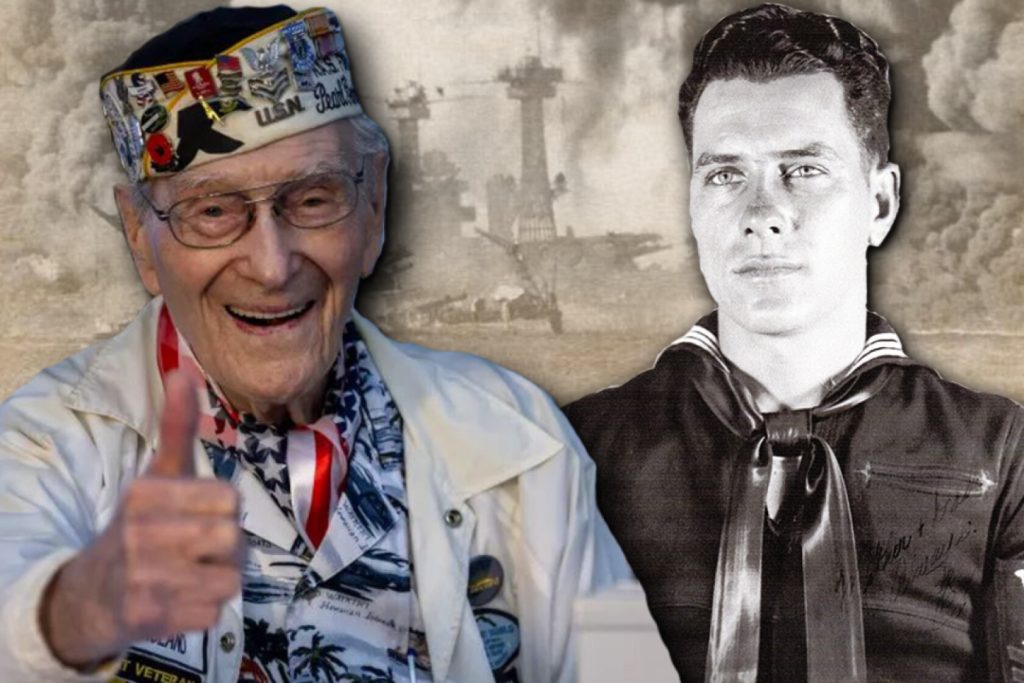
Kohler was just 17 years old when Japanese aircraft appeared over Pearl Harbor shortly before 8 a.m. on a quiet Sunday morning in Hawaii. “And at that age, how were you able to get enlisted?” His son Mike Kohler answered, “His father signed the papers because he believed Chuck might quickly decide military life was too hard and he would return home.”
Stationed on Ford Island in the center of the harbor, he was thrown into chaos as bombs and torpedoes ripped through the naval base.
He was struck by shrapnel and flying debris in the neck and shoulders yet survived the initial assault. He has yet to receive a Purple Heart for his injuries. “It was probably the first bomb to fall on Pearl Harbor,” he said, “so I may have been the first casualty of the war.”
“We were ordered to take cover and get into a construction ditch, but I refused, I didn’t want to die like that. I and another sailor demanded a .50-caliber machine gun at the Ordnance building,” which is an enormous weapon for a seventeen-year-old sailor who later admitted the biggest gun he had ever fired before that day was a .22 rifle on his family farm in Minnesota.
“Throughout the fight I helped fire the machine gun from the ground while Japanese aircraft swept over Ford Island in the second wave of attacks. I then carried ammunition back and forth to other guns.”
The fighting around him was intense. Japanese dive bombers targeted Ford Island hangars, airfields, and battleships moored nearby. Aircraft strafed personnel on the ground while anti-aircraft fire erupted from ships and shore batteries across the harbor.
“My greatest fear was not bombs or bullets, but the threat of court martial for disobeying my officer’s orders not to shoot back,” Kohler said. “The worst part was watching ships explode and capsize while knowing sailors were trapped inside. The images of burning battleships and dying men has stayed with ever since.”
The attack lasted less than two hours, but its impact was catastrophic. Eight battleships were damaged or sunk, more than 180 aircraft destroyed, and 2,403 Americans killed. The strike shattered the Pacific Fleet and propelled the United States into World War II.
Years later, Kohler would reflect on the moment that defined the rest of his life. “Somewhere in that morning, “ he paused, “I lost that 17-year-old sailor.”
A Life Shaped by War and Remembrance
Born in rural Minnesota during the Great Depression, Kohler enlisted in the Navy in April 1941, just months before the attack that would define his generation. He went on to serve throughout World War II and remained in the Navy for 14 years before eventually settling in California’s East Bay.
Now, more than eight decades after Pearl Harbor, he is among only a handful of survivors still living.
This year’s Memorial Concert program marks the 250th anniversary of the United States and honored generations of military service dating back to the American Revolution. Producers say Kohler’s participation underscores a growing urgency: the nation is rapidly losing its last living links to World War II’s defining moments.
A Legacy That Must Be Told
For decades, Kohler has devoted much of his later life to ensuring the story of Pearl Harbor is not forgotten. He has become a central figure in remembrance ceremonies tied to the Mount Diablo Beacon overlooking California’s East Bay.
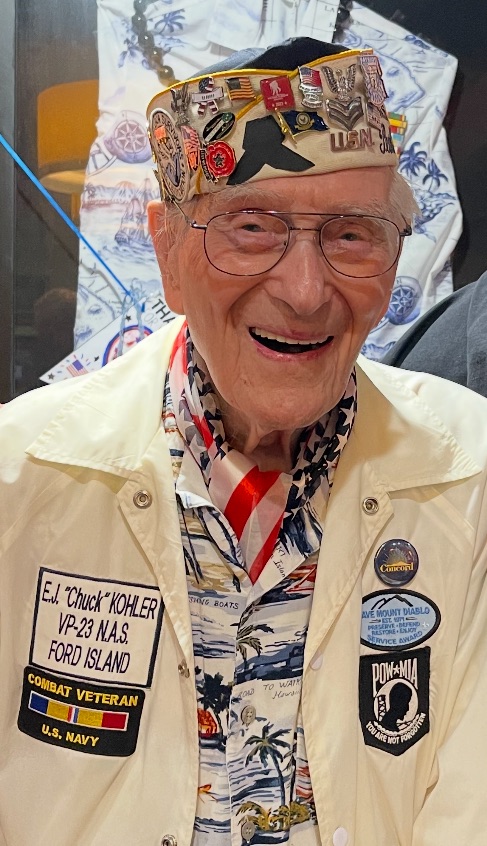
Each December, the beacon atop Mount Diablo is lit in honor of the victims and survivors of Pearl Harbor, continuing a tradition rooted in wartime fears along the West Coast after the 1941 attack
During World War II, the light was extinguished out of concern it could be used as a navigational reference for enemy aircraft or submarines. In later years, its relighting became a symbol of remembrance and resilience.
Today, the annual illumination serves as a tribute to those who lived through the attack and to the generation that fought in the second World War. Earl “Chuck” Kohler is your neighbor in Clayton.
https://www.pbs.org/show/national-memorial-day-concert