by Edi Birsan, Cncordian edibirsan@gmail.com
Treason? That is correct. My favorite document, the “Declaration of Independence” was simply a statement about why we were committing treason against our lawful sovereign government.
I ritualistically read the Declaration of Independence every July 4th. I have written parodies and given talks echoing its familiar phrases and applying it to all sorts of irreverent situations, such as a screed against the War in Vietnam or why the Boston Red Sox’ stink.
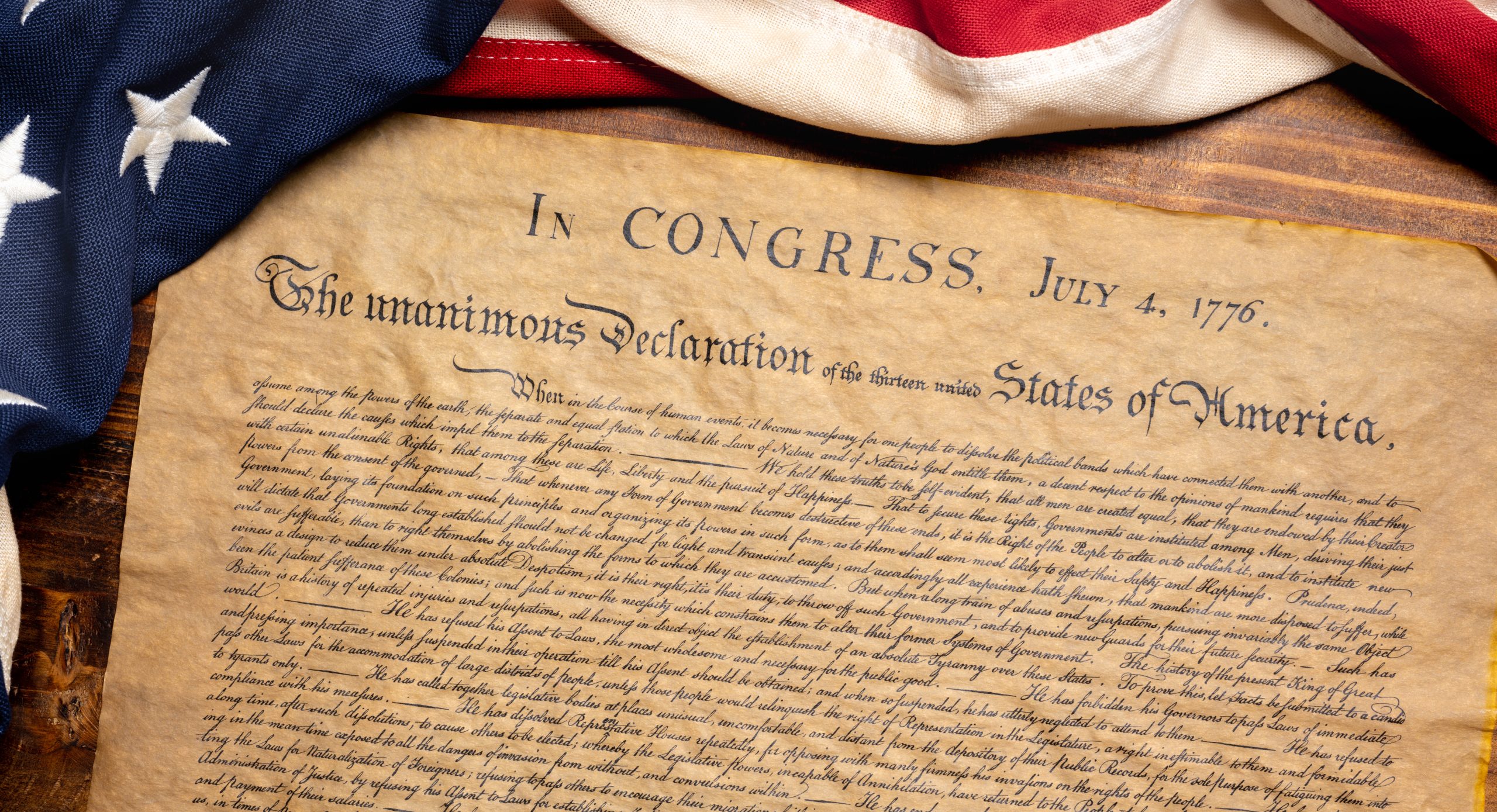
The Declaration of Independence is not the law. The Constitution is the law. The Declaration of Independence was simply a series of statements and grievances against King George III and cutting ties with Great Britain. The wording is beautiful and emotionally provocative, especially at the beginning:
“We hold these truths to be self-evident, that all men are created equal, that they are endowed by their Creator with certain unalienable rights, that among these are Life, Liberty and the Pursuit of happiness.”
In lieu of the word God the Declaration empowers man’s Creator and the concept of ‘Creator’ was rather far removed from Protestant Evangelical and Fundamentalist dogma of current day.
The word: “unalienable” which around 1830 was changed to “inalienable” (but definition is the same) has nothing to do with Rosswell aliens, but that they are inherent non-transferable rights; however, the focus was on the issue that King George III or government cannot take them away. However, like other things in actual law at the time, they ignored the application to slavery.
This leads to the more mundane listing of offensives. In a notable example of personalization, it details and focuses not on the actions of the country of Great Britain but on what King George III did.
“The history of the present King of Great Britain is a history of repeated injuries and usurpations, all having in direct object the establishment of an absolute Tyranny over these States.”
Who were we who wrote this? If you look at the title and elsewhere in the document, you could easily consider it the Declaration of the States of America as “united” was not capitalized or even written in the same font and size of the rest of the title.
Other things not commonly remembered:
It was proposed on July 2 and subsequently modified by the Continental Congress most famously deleting the clause relating to the creation of the slave trade and the importation of slavery in order to secure Southern support and maintain colonial unity.
A draft was signed by some delegates on July 4th {it was passed unanimous}; however, not everyone signed it. The version that we all see today was not the one that was presented on July 4th, 1776. What we have in the National Archives on display is what is called the engrossed copy. That is a special handwritten copy of the actual original on better and larger paper, with better ink and handwriting.
In fact, there was another signing ceremony months later wherein John Hancock put his giant signature on the engrossed document as acting president. Several of the original delegates that were around on July 4th came around to sign. Seven who voted on July 4th never got around to signing it and there were people who were not at the July 4th vote that did sign it. Then again it was good enough for government work.
The views above are those of EdiBirsan@gmail.com and represent what we do when in the course of human deadlines, we are compelled to stay up late and present the cause of which we are separated from our sleep.
How well do you know the Declaration of Independence? Test your knowledge against my Trivia questions Below.
Declaration of Independence Trivia
Here are some trivia questions for you about the July 4th document on display at the National Archives:
- Whose handwriting is it?
- Who was the author of it?
- Where is the original signed on July 4th?
- Were the signers really going to be hung upon capture by the British?
- How many times does the word democracy appear in it?
- Did we misspell British, and complete and Pennsylvania?
- Which of these did NOT sign it: George Washinton, Alexander Hamilton, James Madison, James Monroe, and Ben Fanklin.
- Do they have the 4th of July in England?
Answers:
1. Timothy Matlock (no relation to the TV lawyer) as the Secretary Clerk of the Congress
2. Since it was modified by Congress, Congress is the actual author not Thomas Jefferson alone who was also the lead writer of a Committee.
3. I have no idea, but if you find it I will trade you a bridge in Brooklyn for it.
4. Richard Stockton was captured by the British, he was not hanged but also gutlessly renounced the whole thing.
5. Democracy never appears in it.
6. In today’s English we do not spell Brittish, compleat and Pensylvania.
7. Only Ben Franklin of those listed signed it.
8. Yes, it comes between the 3rd and the 5th of July.